
The home system
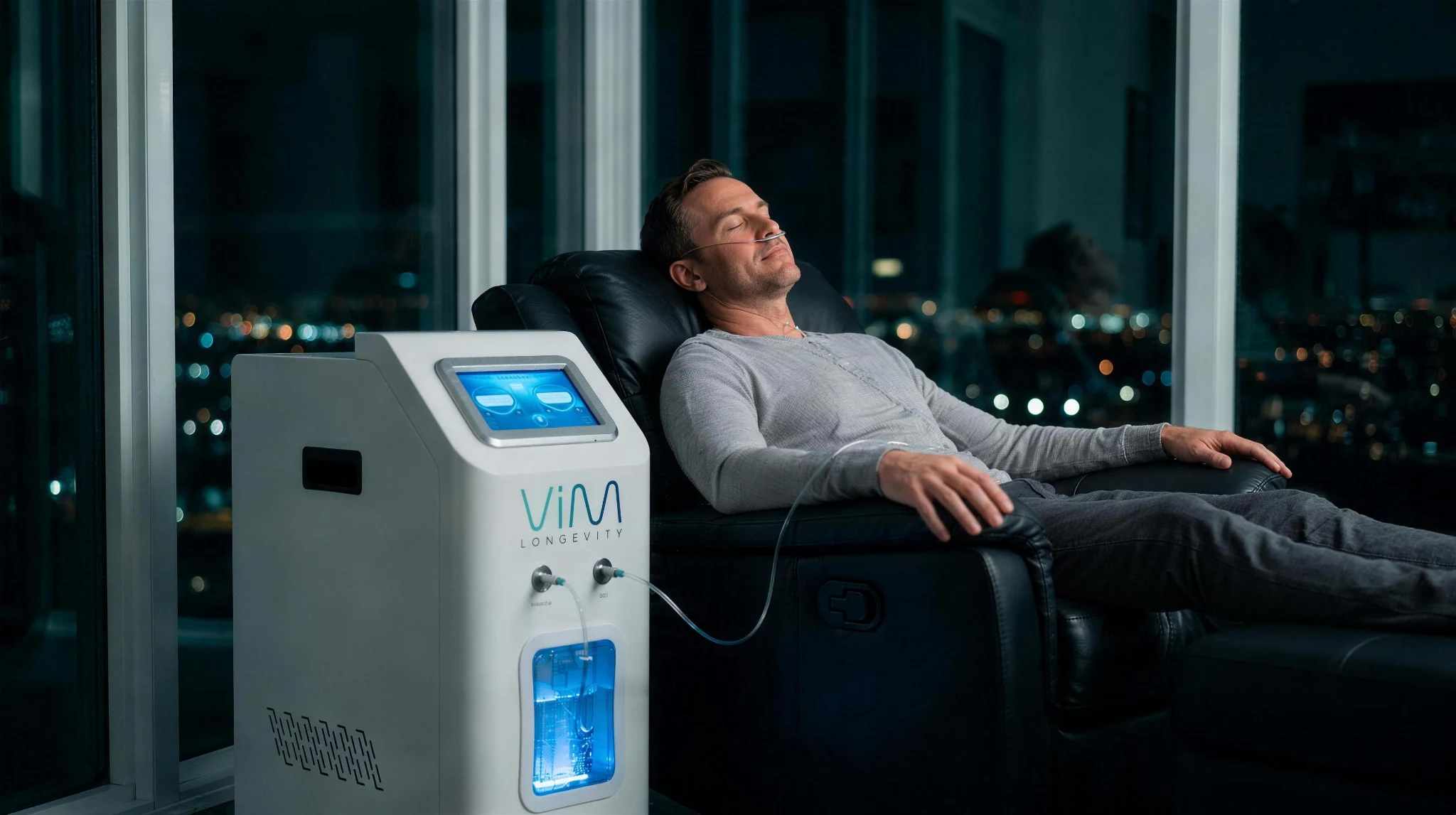
Daily sessions at home, for people who want to support their energy, sleep and recovery. Breathe while you read, work or rest, then get on with your day.
vim (noun): energy and vitality.
Getting older usually shows up the same way: slower thinking, a mind that is not as clear, aches and pains, and that feeling of being run down.
The energy in your cells comes from batteries called mitochondria. You have trillions of them, and most of them sit in your heart and your brain. As we get older those batteries lose energy, and there are fewer of them.
Lower energy means
Some people lose energy faster and some slower. How fast you lose your batteries depends on a handful of things.
Inhaling hydrogen modulates inflammation, and it increases both the number of your mitochondrial batteries and the energy in them.
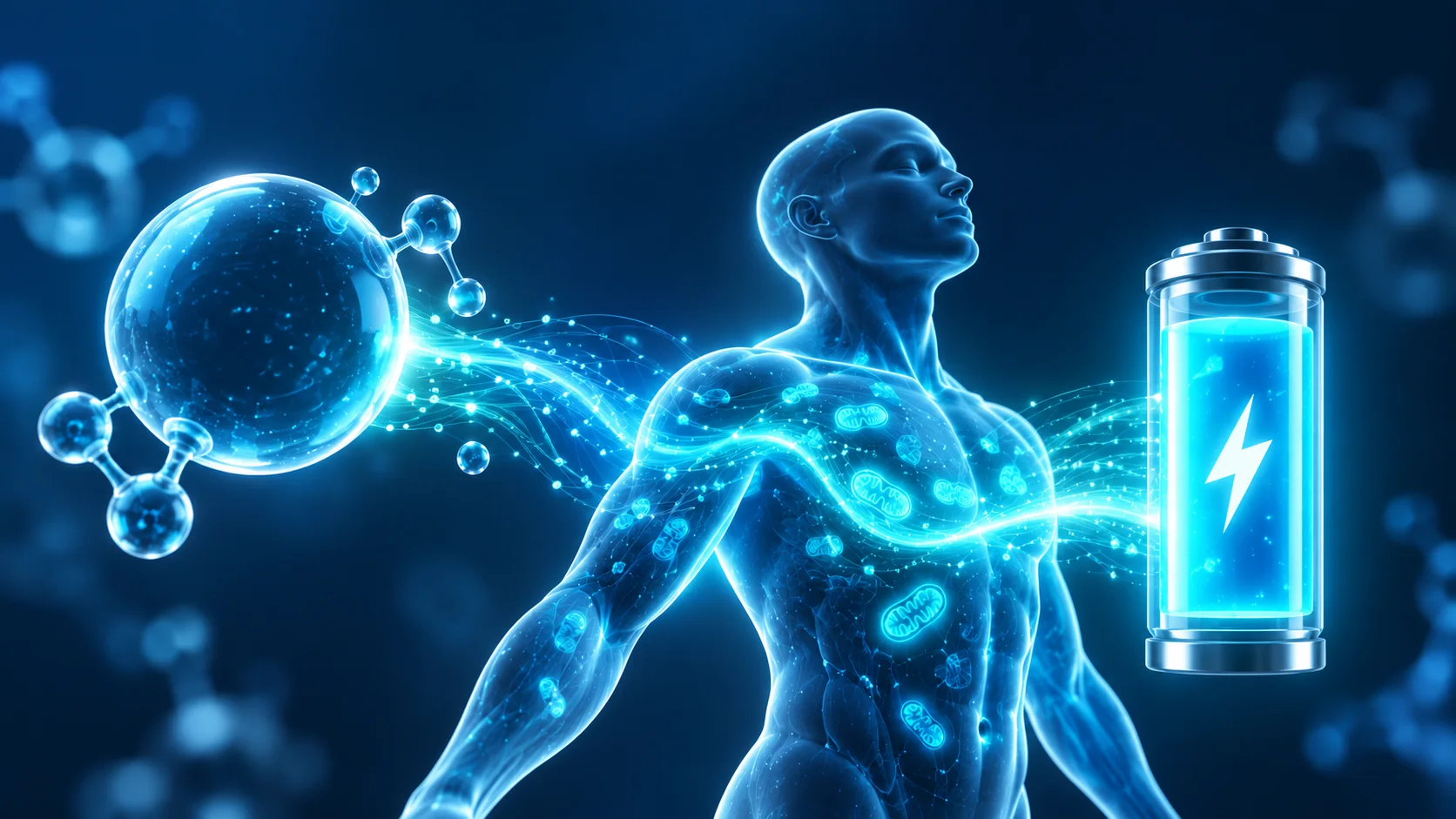
Energy goes up. Aches settle or go entirely. Thinking is clear and focused again, the way it was when you were younger.
It is the closest thing to the fountain of youth most of us will ever hear about. The difference is that this one is real, and people of every age are using it, all over the world.
If you are being treated for something, tell your physician you are using it.
It is simpler than it sounds. Hydrogen therapy means taking in more hydrogen gas than you would get on your own, so that more of it reaches your cells. Your body already makes small amounts of it every day, in the gut. This is the same gas, in a dose you can control.
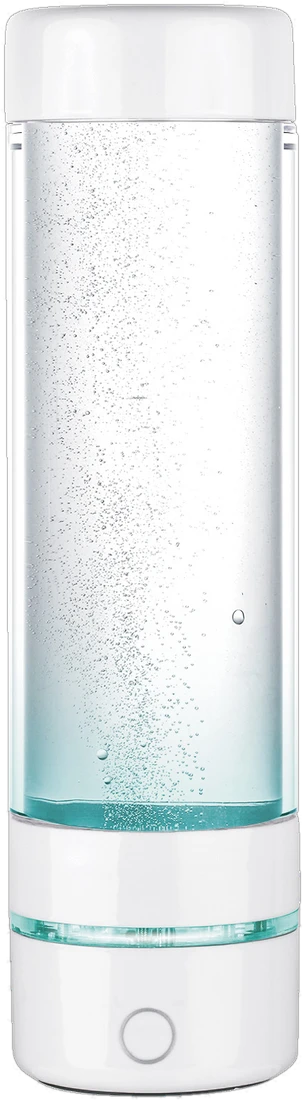
The oldest way in, and the one most of the published research used: hydrogen dissolved in water, either from a bottle that makes it or from a tablet dropped into a glass. It has the most human research behind it, and it is easy to do anywhere.
The catch is the ceiling. Water can only hold so much hydrogen, and you can only drink so much water, so the amount that reaches you is capped by your stomach.
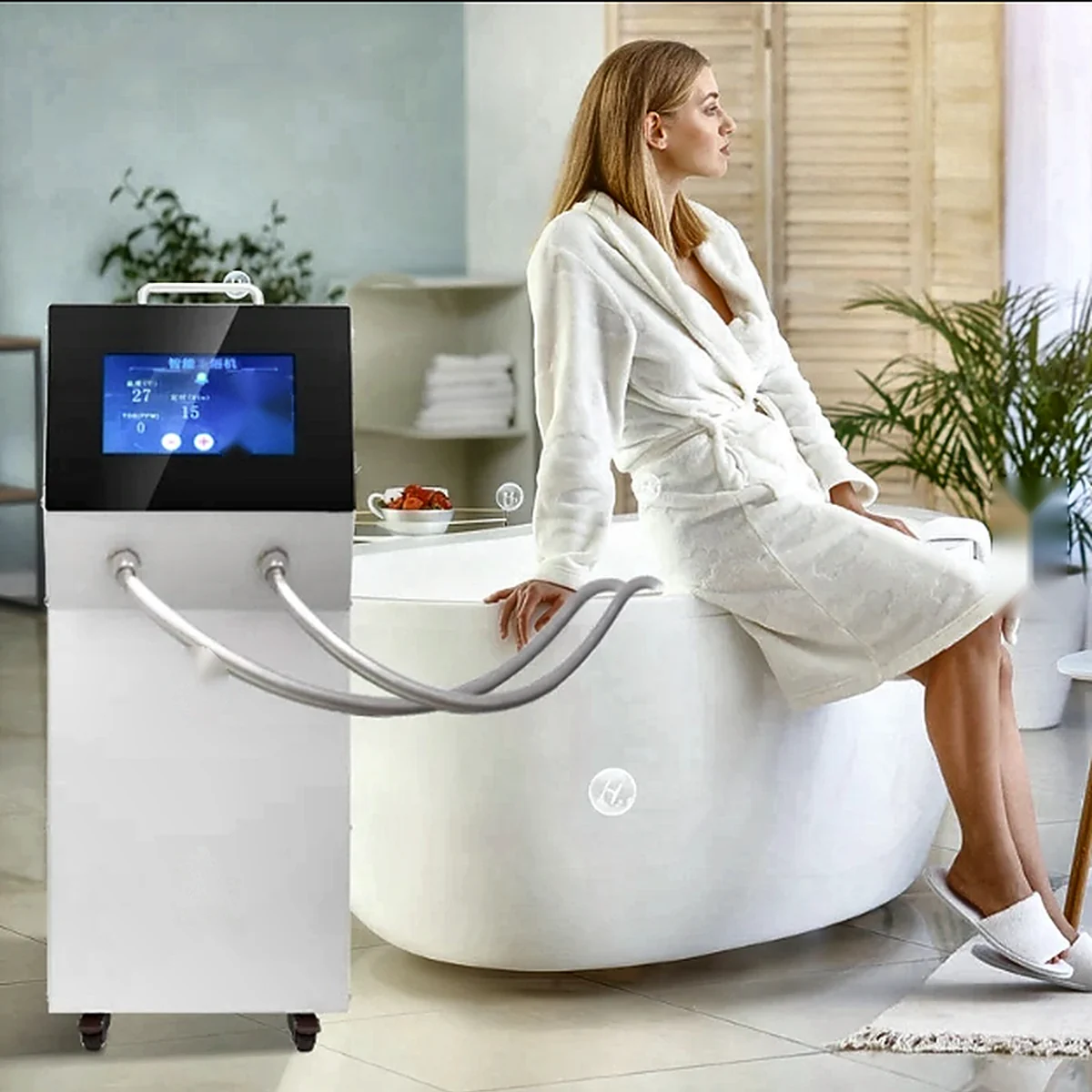
Hydrogen passes straight through the skin, so the water does not have to be swallowed to reach you. You can do it with tablets in the tub, or with a floor unit that feeds hydrogen-rich water into a foot bath or a full bath.
Many people use it to unwind after training or a long day. Fifteen or twenty minutes is a session.
The newest of the three, and the reason this is now a clinic service rather than a drink. A machine splits distilled water into hydrogen and oxygen, and you breathe the hydrogen through a soft tube under your nose.
Because it goes in through the lungs, it is not limited by how much water you can hold. You set the minutes and read, work or rest while it runs. Human studies of inhalation are fewer and newer than those of hydrogen water, and we show you both.
None of this is a drug. People who use hydrogen tend to make it a daily habit, like a walk or a good night’s sleep.
Daily sessions at home, for people who want to support their energy, sleep and recovery. Breathe while you read, work or rest, then get on with your day.
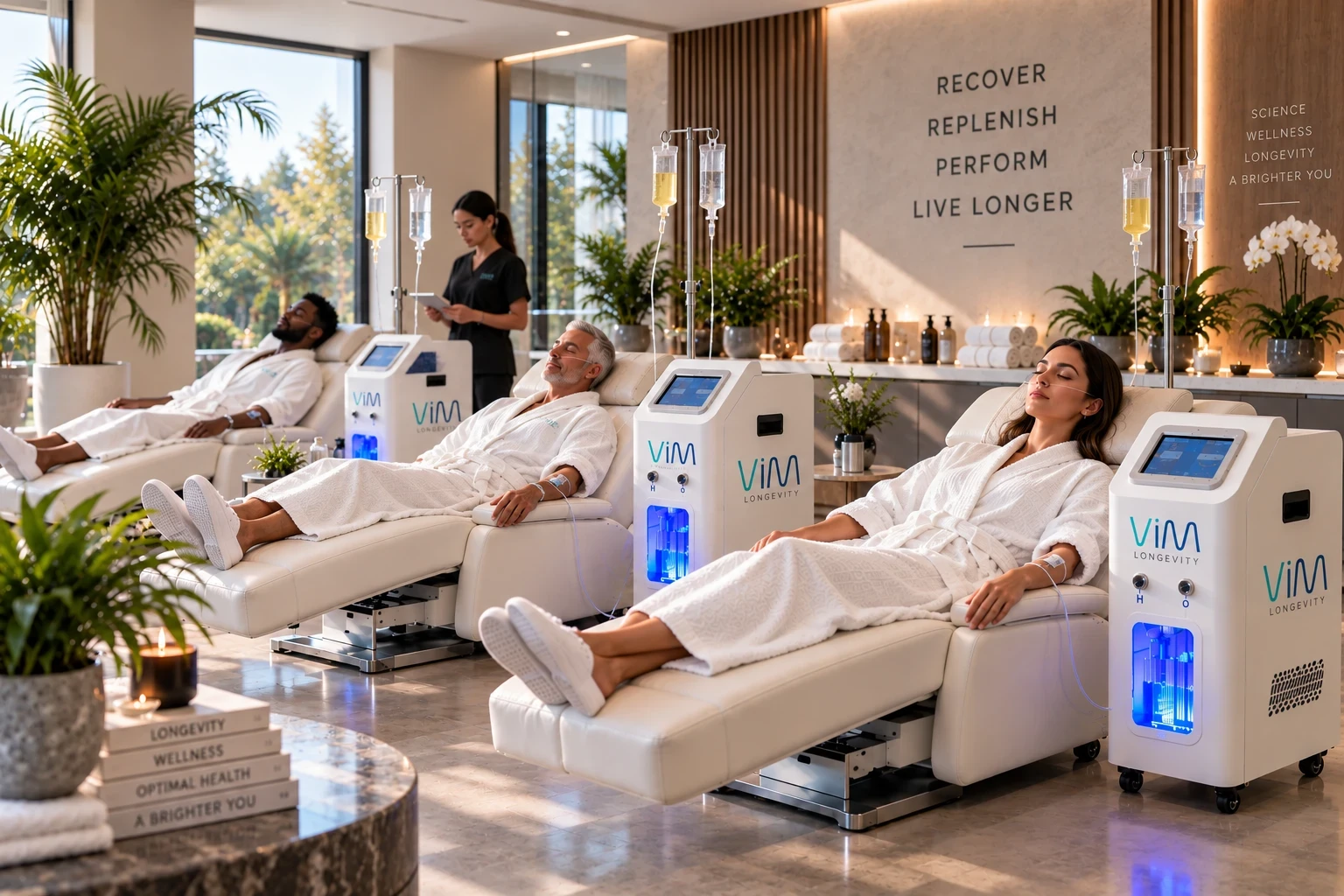
Med spas and clinics are becoming wellness clinics. Hydrogen therapy is a new service that fits alongside what you already offer, and we help you set it up and train your team.
Our first units are going into clinics and training facilities.

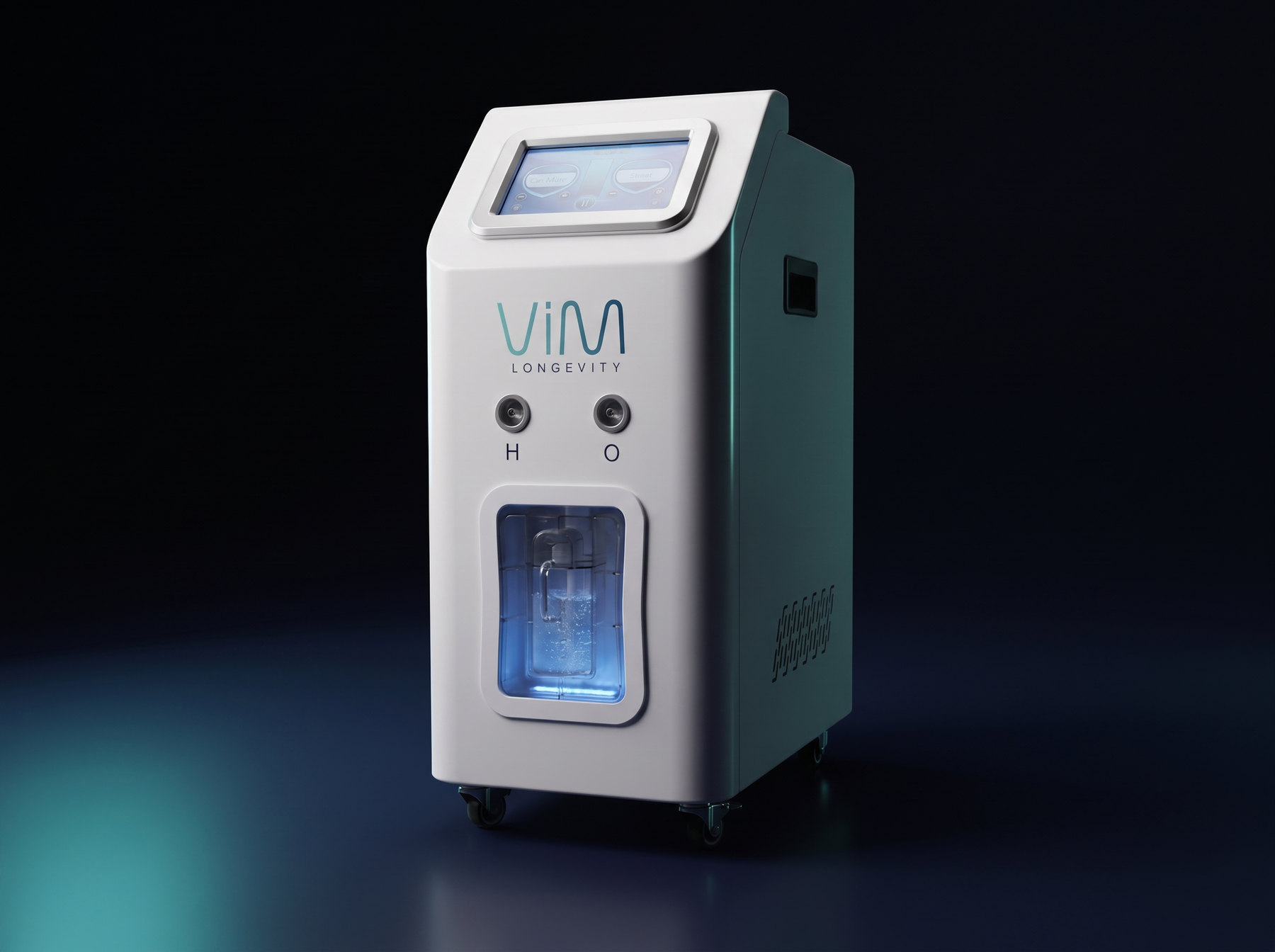
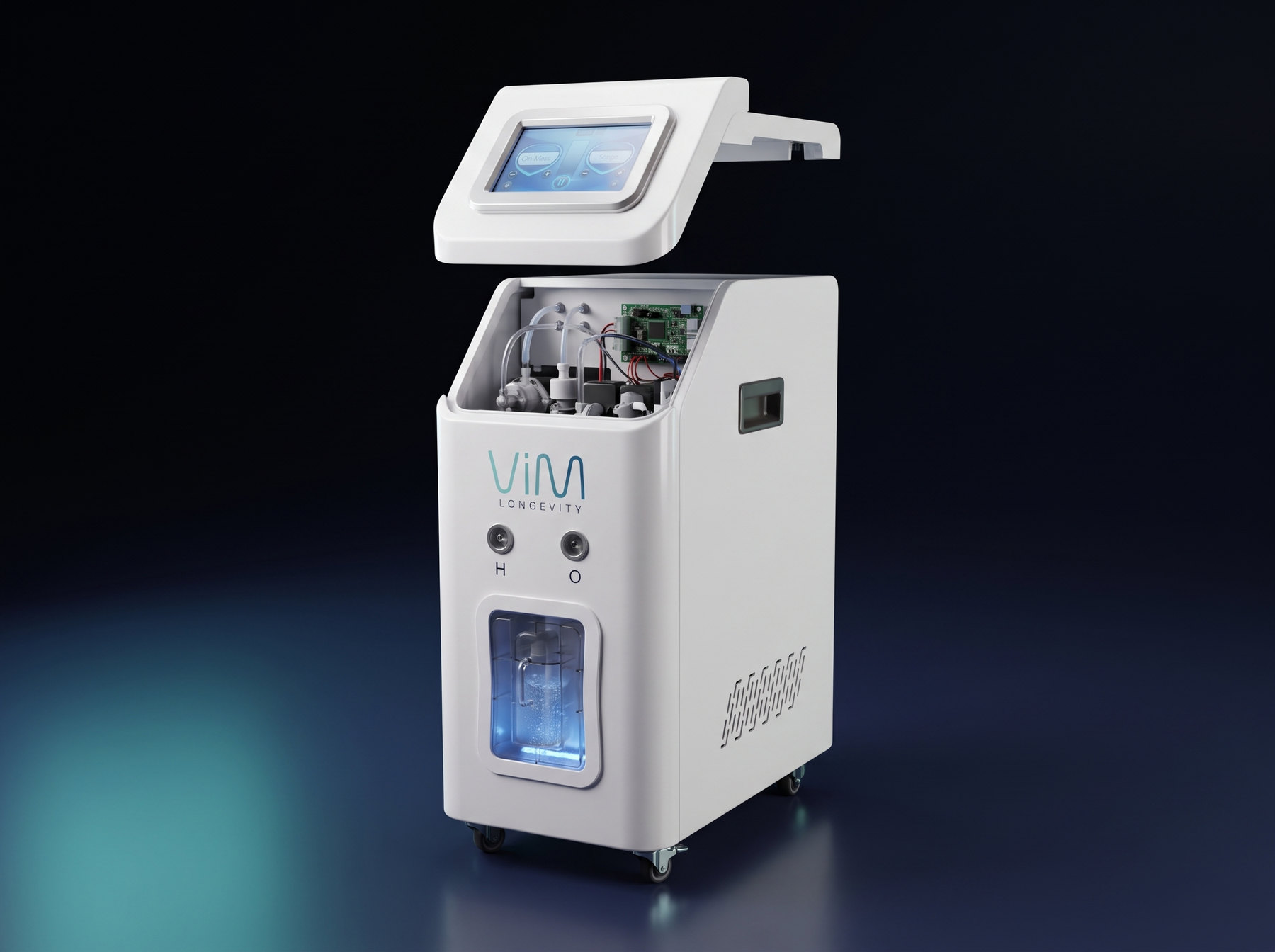
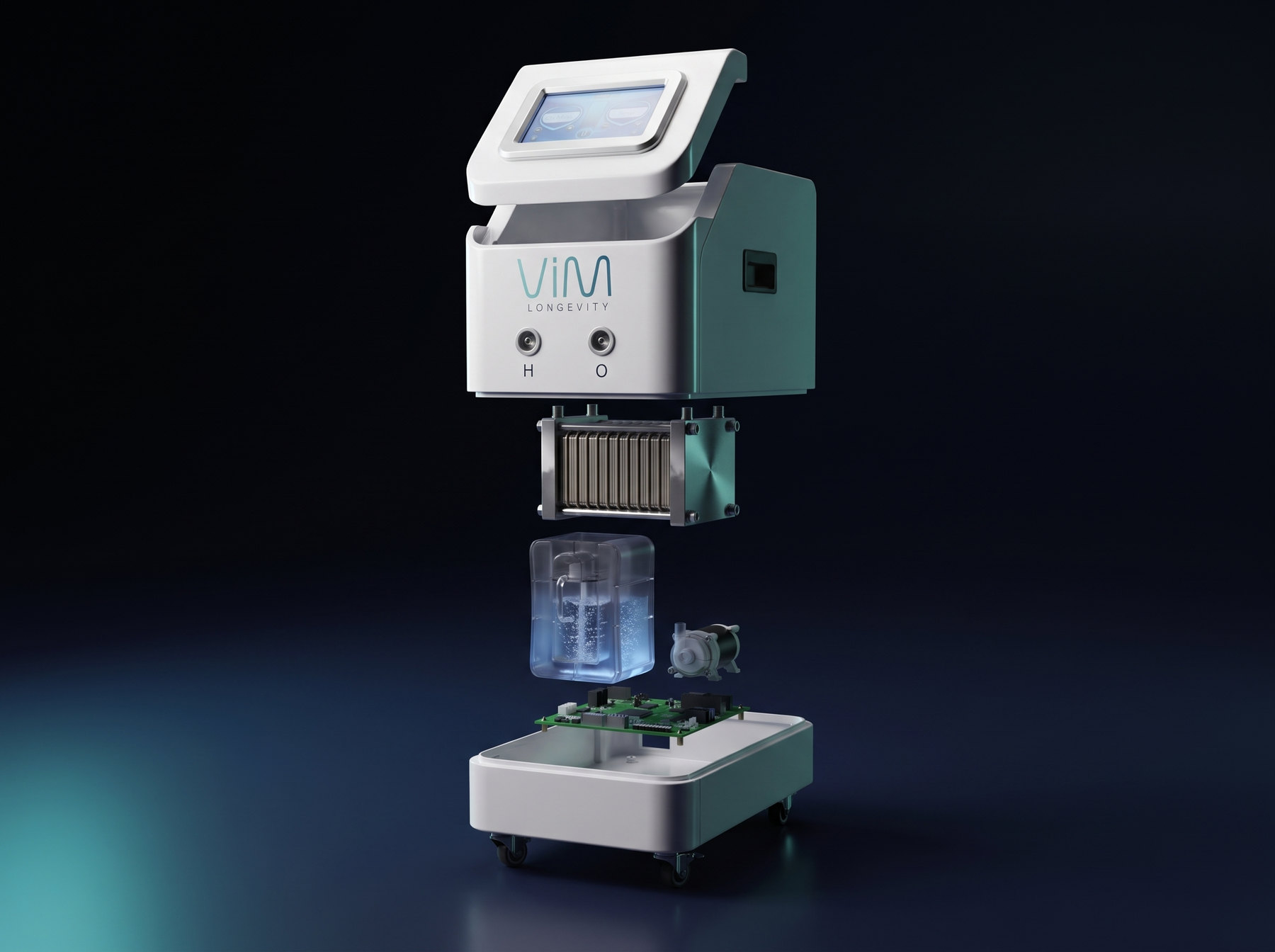 Touch screen
Cabinet
PEM cell stack
Water reservoir
Pump and separator
Control board
Base and castors
More ways to use hydrogen
Bath systemHydrogen absorbs straight through the skin: 7.5 litres a minute of hydrogen-rich water, into a foot bath or a full bath.
Learn more
Bottle400 mL, up to 9,000 ppb. It charges over USB-C, so it comes with you: the car, the plane, a long trip.
Learn more
Decades of clinical practice, and a career-long habit of asking two questions about anything new: does it do harm, and how many people does it actually apply to.
Decades of clinical practice, and a career-long habit of asking two questions about anything new: does it do harm, and how many people does it actually apply to. Hydrogen was the first answer he could not argue with. He is the one who drives the unit to your clinic, sets it up, and stays to teach your staff.

A systems engineer who has taken apart every hydrogen unit he could buy, from Bulgaria to Japan, and rejected most of them.
A systems engineer who has taken apart every hydrogen unit he could buy, from Bulgaria to Japan, and rejected most of them. He specifies the PEM stack, the pump and the cannula. His standard is that a machine should be impossible to use wrong.
Four decades sit behind that judgment: the Marine Corps, IBM systems engineering, data recovery work for the U.S. Department of Defense, invention and manufacturing, government consulting across Central America and the Caribbean, and MIT's Applied Agentic AI for Organizational Transformation program. The full record is on the team page.

Spent his career building brands and growth systems for other companies, then applied the same discipline to his own health.
Spent his career building brands and growth systems. He runs a digital marketing agency helping medical practices and med spas grow revenue and scale.
Molecular hydrogen has a good safety record in published human studies, and it isn't a drug — it's a gas your own body already produces. Hydrogen gas is flammable, so use the H2 Station in a ventilated room, away from open flames, and never smoke during a session. Use one nasal cannula per person. If you are pregnant, nursing, managing a medical condition or taking medication, check with your physician first.
Inhalation can deliver more hydrogen in a single session than you could comfortably drink, because it isn't limited by how much water hydrogen can dissolve in or how much you can hold. It gives your body a steady supply for the whole session, through the lungs. Most published human research so far used hydrogen water; inhalation studies are newer, and we track both in our evidence library.
Everyone responds differently, and some people notice no change. In the studies we feature, measured changes showed up after four to twenty-four weeks of regular use.
Statements on this page have not been evaluated by the FDA. VIM systems are wellness devices, not intended to diagnose, treat, cure or prevent any disease.
Four studies we keep coming back to, what each one actually showed, and where it stops.
The research: sixty adults with metabolic syndrome drank high-concentration hydrogen water for twenty-four weeks. Cholesterol, blood sugar and HbA1c came down, and so did the inflammation and oxidative stress markers.
What that means: in 60 adults with metabolic syndrome, markers your physician tracks moved in a favorable direction compared with placebo. Body size barely changed. One trial, promising but not definitive.
LeBaron et al. · Diabetes, Metabolic Syndrome and Obesity · 2020
The research: sixteen professional soccer players ran fifteen sprints with twenty seconds between them, once with hydrogen water and once with placebo. With hydrogen they held their speed better in the final sprints. Earlier sprints, lactate and perceived effort were the same.
What that means: a small, specific effect late in repeated high-intensity efforts, in a small group of elite athletes.
Botek et al. · Nutrients · 2022
Preclinical · Cell and animal study
The research: in cultured cells and a rat model of stroke, hydrogen gas selectively reduced the hydroxyl radical and peroxynitrite, two of the most damaging reactive species, while leaving the signaling molecules the body relies on largely untouched.
What that means: this is the proposed mechanism behind most hydrogen research since. It explains why hydrogen might help; the human trials are where we find out whether it does.
Ohsawa et al. · Nature Medicine · 2007
The research: in a randomized, double-blind trial, healthy adults who drank hydrogen-rich water for four weeks showed lower inflammatory signaling.
What that means: in a four-week randomized, double-blind trial, inflammatory signaling in blood cells went down and fewer immune cells died off. Antioxidant markers improved only in participants aged 30 and over.
Sim et al. · Scientific Reports · 2020
Browse by research area
Inflammatory signalling in blood cells was turned down and fewer immune cells died off. The antioxidant markers themselves only improved in the participants aged 30 and over.
Disease activity and two inflammatory markers came down in the hydrogen group. Worth knowing: the hydrogen here was given by infusion, not breathed or drunk.
Gene activity tied to inflammation was dialled down. The individual blood markers moved in the same direction but not far enough to count as a real difference.
Blood lactate rose less during hard cycling and muscle force held up better early on. The markers of oxidative damage did not change.
The players held their speed better in the last sprints of the session. Earlier sprints, lactate and how hard it felt were the same as placebo.
Lunges were faster, blood lactate was lower and muscle soreness a day later was rated lower than with placebo.
Across the whole group there was no difference in cognitive scores. The carriers of the APOE4 gene, the group at highest genetic risk, did improve.
Psychological distress scores and resting sympathetic nerve activity were lower after hydrogen water. The study was funded by a drinks company.
No improvement. An earlier 17-patient pilot by the same group had been positive; the large trial did not hold it up. This is the biggest trial in the field and we would rather you saw it here.
Cholesterol, blood sugar and HbA1c came down, along with inflammation and redox markers. Body size barely moved.
Liver fat measured by MRI fell by a small but real amount. Liver enzymes, weight and body composition did not change.
Fewer food cravings, better-rated sleep and lower cholesterol. Two of the results sit right on the line of what counts as significant.

vim (noun): energy and vitality.
Tell us about your home, your team or your clinic, and we'll be in touch soon.